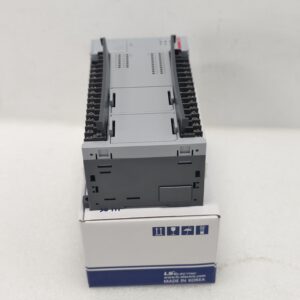
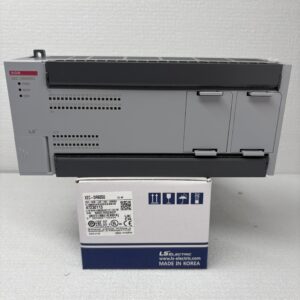
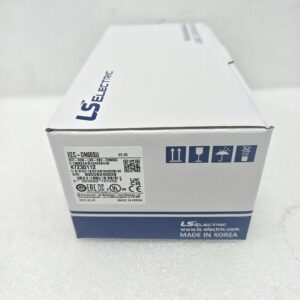
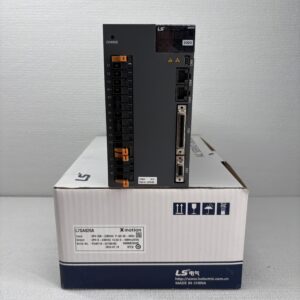
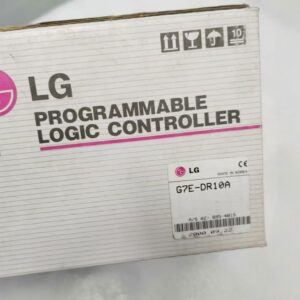
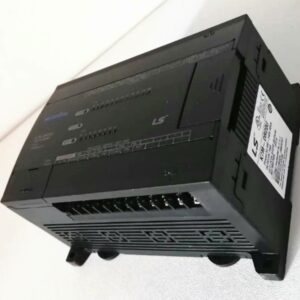
Processing Speed: It executes basic instructions at 0.2 microseconds (μs) per step, making it fast enough for real-time machine adjustments.
Memory Capacity: Features a program memory of 15k steps to store complex automation rules and logic.
Input/Output (I/O) Capacity: Can support up to 1,024 total I/O connection points to read data from sensors and send commands to motors or valves.
System Expandability: Allows for a maximum of 3 expansion stages and can mount on base racks featuring 4, 6, 8, or 12 slots.
Built-in Troubleshooting: Includes self-diagnostic safety tools like a Watchdog Timer and sensors for tracking memory errors, battery health, and power issues.
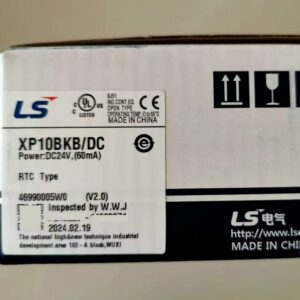
Memory Capacity: 256 KBytes Flash memory (Project data) & 1,000 words System RAM
Physical Interface: Operator dialogue keypad
Panel Cutout Size: 141 mm (W) x 87 mm (H) (Note: Some documentation lists an 85 mm height cutout)
Certifications: CE, cULus Listed, KC
Supported Protocols: Fully compatible with Master/Slave topologies, Modbus (RTU and ASCII), and LS Electric proprietary frameworks such as MASTER-K Loader/Link (CNET) and GLOFA-GM Loader/Link (CNET).
LS XP10BKB-DC Human-Machine Interface (HMI) (XP Series).
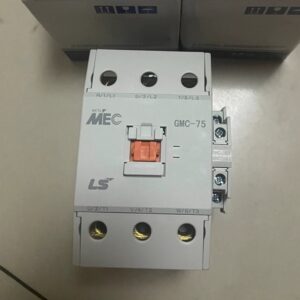
Control Coil Voltage: 110V AC (Narrow range, typical tolerance ±10%)
Installation Profile: 35mm DIN Rail or traditional screw back-plate mounting
The Official Active Drop-In: LS Electric officially mandates the Metasol MC-75a as the active structural and electrical replacement for legacy GMC-75 models.
Dimensions & Alignment: The modern Metasol alternative features identical terminal behaviors but boasts updated finger-proof housing designs and physical body parameters (94mm Width × 140mm Height × 137mm Depth).
Verify Control Voltage Stability: Use a digital multimeter to measure your 110V control bus under full load conditions. Standard 110V AC coils can drop out or buzz severely if the voltage sags below 85% of nominal.
Thermal Overload Matching: If reusing an existing bimetallic thermal overload relay, ensure the pin configuration aligns properly with the base terminals of the replacement contactor.
Torque Validation: Always torque structural main electrical power terminals to the factory specified rating to mitigate regional hot spots and high contact resistance over intensive duty cycles.